
15 hr
Montenegro Coast: Kotor & Sveti Stefan Day Trip from Tirana
Discover Montenegro's UNESCO bay and iconic island resort on a scenic full-day escape from Albania
Reserve
Hand-picked by our editors — only the best 5 Montenegro Coast trips from 12 reviewed.
Verified partners for every tour, free cancellation where available, and instant confirmation on every booking.
15 hr
Discover Montenegro's UNESCO bay and iconic island resort on a scenic full-day escape from Albania
Reserve
15 hr
Full-day coastal adventure from Albania exploring medieval Budva and the iconic Sveti Stefan island
Reserve
14 hr 30 min
Cross three borders in one day: explore Podgorica's bridges and Trebinje's riverside old town
ReservePrices from verified partners. Availability updates in real time at checkout. Free cancellation policies apply where shown.
The landmarks, rooms, and views travelers on this tour remember — all visible on a single visit.
This 12th-century structure remains a focal point of Kotor architecture with its twin towers and Romanesque design. It survived major earthquakes in 1667 and 1979.
The fortifications stretch 4.5 kilometers along the mountain slope. Reaching the top provides panoramic views of the bay.
Located within the old town, this fort offers insight into medieval maritime defenses. It dates back to the 9th century with significant 19th-century renovations.
This iconic 1602 landmark stands at the main entrance to the old town. It is a symbol of the city's historical resilience.
Guided excursions offer seamless logistics and local insights, whereas a self-drive road trip provides full flexibility for independent explorers. Most travelers find that a structured tirana to montenegro day tour minimizes transit headaches, while private car rentals grant more freedom to visit Kotor landmarks on your own terms.
| Feature | Top pick Organized Day Tour | Self-Drive Road Trip |
|---|---|---|
Border crossing complexity |
Handled by operator | Driver manages all paperwork |
Navigation difficulty |
None — professional guide | High — local signage varies |
Total transit time |
4–5 hours each way | 3.5–5 hours depending on traffic |
Stress levels |
Low — relaxation focused | Moderate — road focus required |
Ability to customize stops |
Limited to scheduled itinerary | Full autonomy to explore routes |
Overall cost |
Fixed per seat pricing | Variable based on fuel and tolls |
| See tickets → |
Verdict: If you prioritize comfort and want to avoid the logistical burden of international driving, these tirana to montenegro day tour tours are the superior choice, while the self-drive option is better for those who view these tirana to montenegro day tour tickets as a chance to dictate their own pace.
Choose your ticket, select your date, and reserve in under two minutes. Secure checkout handled by our verified partner.
Instant confirmation by email, with a mobile voucher you can save offline. No printing, no queuing at a collection desk.
Arrive at the entrance, show your voucher on your phone, and walk in. Most tickets include priority or skip-the-line access.
Practical details for your visit straight from our verified partners — hours, access, rules, and how to get there.
Tirana, Albania
Primary pickup location for organized transit.
Driving is the most direct method via the M-2 road.
Modest clothing is recommended when visiting religious sites within Kotor or Budva. Ensure shoulders and knees are covered to comply with local church regulations.
Keep belongings secure in crowded old town squares and marketplaces. Large luggage is impractical for narrow cobblestone streets.
Photography is permitted in most public areas. Respect signage prohibiting flash photography inside specific historical interiors.
Many old town areas feature uneven stone paving which can be challenging for mobility aids. Accessible routes are limited in historic districts.
Mobile roaming charges may apply when crossing the border from Albania to Montenegro. Check data plans before beginning your tirana to montenegro day tour.
Strollers can be difficult to maneuver on medieval cobblestones. Carrying gear is advised for parents navigating the coastal old towns.
Numerous cafes and restaurants serve local Mediterranean cuisine throughout the Montenegro Coast. Carry reusable water bottles to stay hydrated during excursions.
Pets are generally permitted in outdoor public spaces but often restricted in indoor shops and dining establishments. Check local signage before entry.
The tirana to montenegro day tour involves border crossings requiring valid travel documents. Maintain awareness of your group leader's schedule to ensure timely departures.
Best time to go, insider tips, nearby landmarks, and the cancellation fine print — flip through to skim what matters to you.
How crowds, weather, and events shift across the year.
Mild temperatures and thinner crowds make this ideal for walking tours.
Small details that turn a good visit into a great one.
Arrive between 08:00–10:00 to experience the old town before the main influx of cruise passengers.
Non-bookable sights within a short walk — free to visit, easy to pair.
Romanesque structure dating back to 1166.
Flexible, no hidden fees.
Full refunds are provided for cancellations made within the operator's specified booking window. There is a 0 EUR entrance fee for general access to public coastal areas and old towns.
Hand-picked options within walking distance — pick a district for vibe, or a specific hotel for convenience.
Historic building converted into modern lodging.
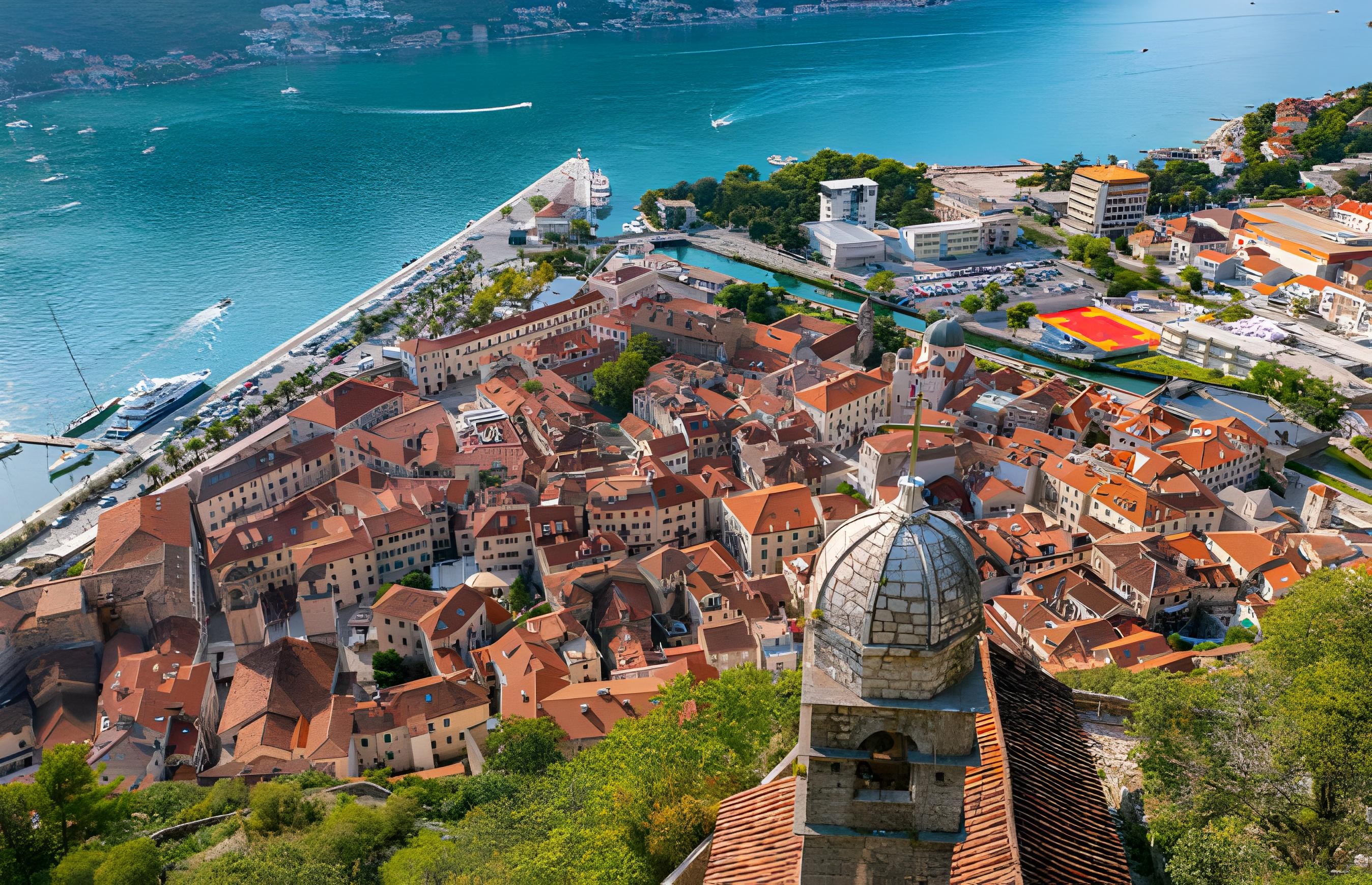
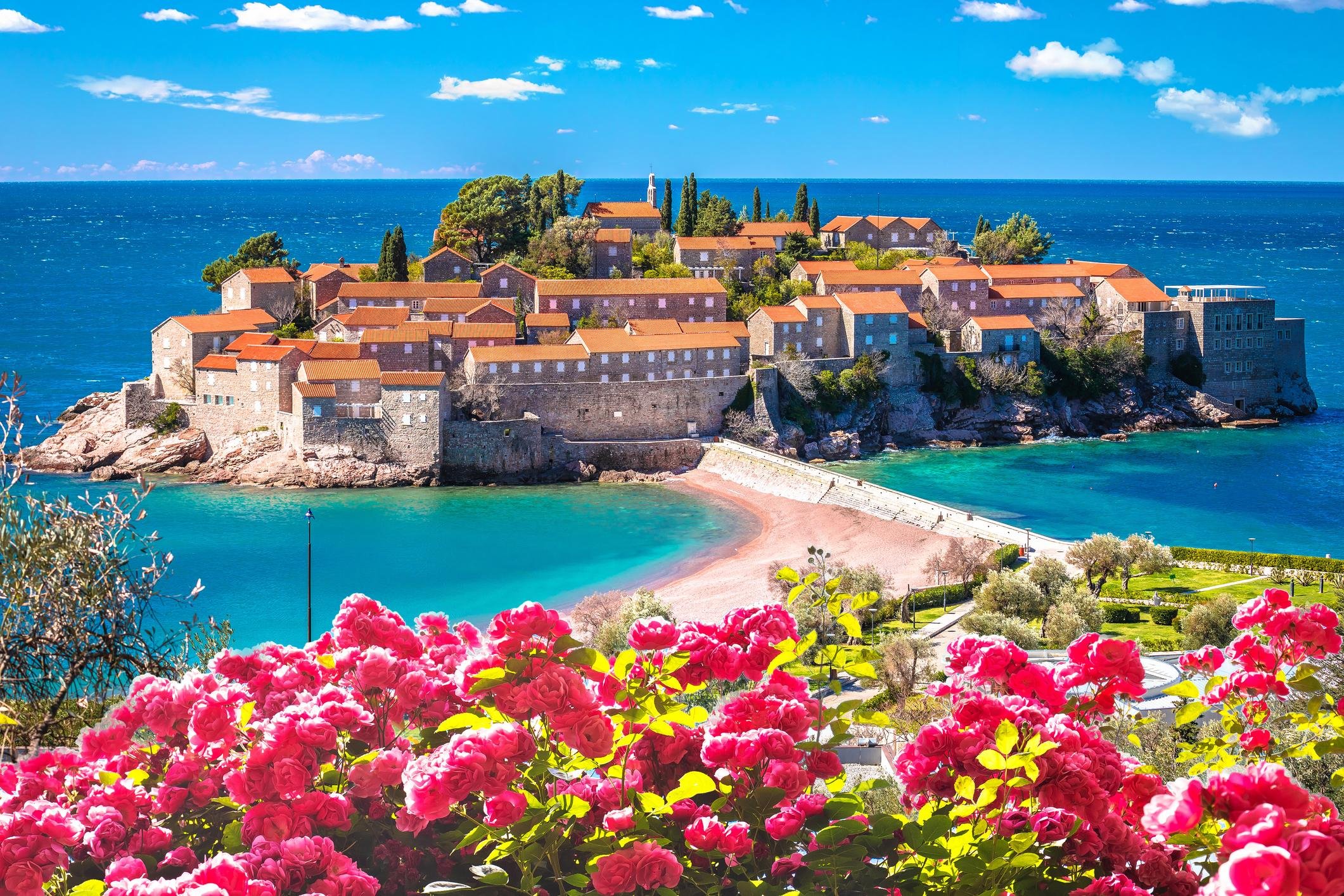
The Bay of Kotor carves twenty-eight kilometres into Montenegro's limestone spine, Europe's southernmost fjord and the only one framed by medieval fortifications rather than Nordic pine. Albanian travellers discovered the route in the early 2000s when border formalities eased, and by 2010 the Tirana–Shkodër–Kotor corridor had become the Balkans' most trafficked cross-border day route, pulling thirty thousand visitors annually from the capital to a coastline that feels lifted from the Italian Riviera yet costs half the price. Kotor's Old Town holds 1,200 years of Adriatic history compressed into a 0.5-square-kilometre grid, its ramparts climbing 260 metres to the fortress of San Giovanni in a zigzag of 1,350 steps. Byzantine mosaics gave way to Venetian Gothic when the Republic of Venice claimed the bay in 1420, and the architecture froze there — limestone palazzi, Orthodox bell towers crowned with copper, and the Cathedral of Saint Tryphon, consecrated in 1166 and rebuilt after the 1667 earthquake that levelled half the Dalmatian coast. UNESCO inscribed the bay in 1979, citing its "outstanding universal value" as a natural harbour shaped by tectonic collapse and a cultural crossroads where Latin and Byzantine traditions fused without erasing one another. Budva's Stari Grad occupies a thumb of land 0.4 kilometres wide, its walls dating to the fifth century BC when Illyrian settlers raised the first citadel on a Greek trade route. Romans followed, then Slavs, then Venetians who rebuilt the fortifications after the 1979 earthquake — Montenegro's worst in four centuries — reduced eighty per cent of the old quarter to rubble. Restorers used original limestone blocks and medieval construction techniques, a painstaking decade-long effort that earned the town a Europa Nostra award in 1987. Today Budva balances heritage conservation with Adriatic resort development, its fifteen beaches drawing two hundred thousand summer visitors while the old town remains a working neighbourhood, not a museum set. Sveti Stefan, three kilometres south, is a fifteenth-century fishing islet converted into a luxury resort in 1960, its pink stone villas and terracotta roofs visible only from the coastal road or the public beaches flanking the causeway. The islet is closed to non-guests, but the view alone — a fortified village floating in cyan water — justifies the detour and anchors every Tirana to Montenegro day tour itinerary as the coast's signature postcard moment.
"The Bay of Kotor is Europe's southernmost fjord, where 1,200 years of Adriatic history compress into half a square kilometre of Venetian limestone."
A step-by-step walkthrough of the visit — what you'll see, how long each stage takes, and the details that matter.
You depart Tirana between 7:00 and 8:00, crossing the Albanian lowlands through Shkodër before the Hani i Hotit border checkpoint, where your guide handles customs formalities while you stretch your legs at the café overlooking Lake Shkodër. The road climbs into Montenegro's karst uplands, limestone ridges giving way to the first glimpse of the bay — a mirror of turquoise hemmed by peaks. Kotor's Old Town opens at the Sea Gate, and you follow your guide past the Cathedral of Saint Tryphon into the maze of alleys where laundry hangs between Gothic windows. If you choose the ramparts climb, you ascend 260 metres in forty minutes, pausing at the Chapel of Our Lady of Remedy halfway up, the bay spreading wider with each switchback. At Budva you walk the perimeter wall, the Adriatic crashing against the base, then slip into the lanes where artisan shops sell Montenegrin honey and filigree silver. Sveti Stefan appears as you round the coastal bend — a pink islet tethered to the shore, its beach open to the public though the resort gates remain closed. You photograph from the overlook, then return to the coach for the late-afternoon drive back through the mountains, reaching Tirana by sunset with stamped passports and a camera full of UNESCO limestone.
Public coastal areas and old towns remain accessible 00:00–23:59 daily.
Accessibility varies due to uneven historic terrain, making some areas difficult for mobility aids.
There is 0 EUR entrance fee for general access to public coastal areas and old towns.
Bring your passport, comfortable walking shoes, and sun protection for your day tour.
The best arrival window is 08:00–10:00 to avoid cruise ship crowds and peak heat.
Yes, families are welcome, though navigating narrow streets with strollers is challenging.
You can secure your tirana to montenegro day tour tickets through our live booking interface.
Photography is permitted in public spaces, provided you respect private property and local signage.
Yes, many restaurants are available throughout the Montenegro Coast for travelers.
Cancellations are managed based on the operator's terms provided during the booking of your tour tickets.